


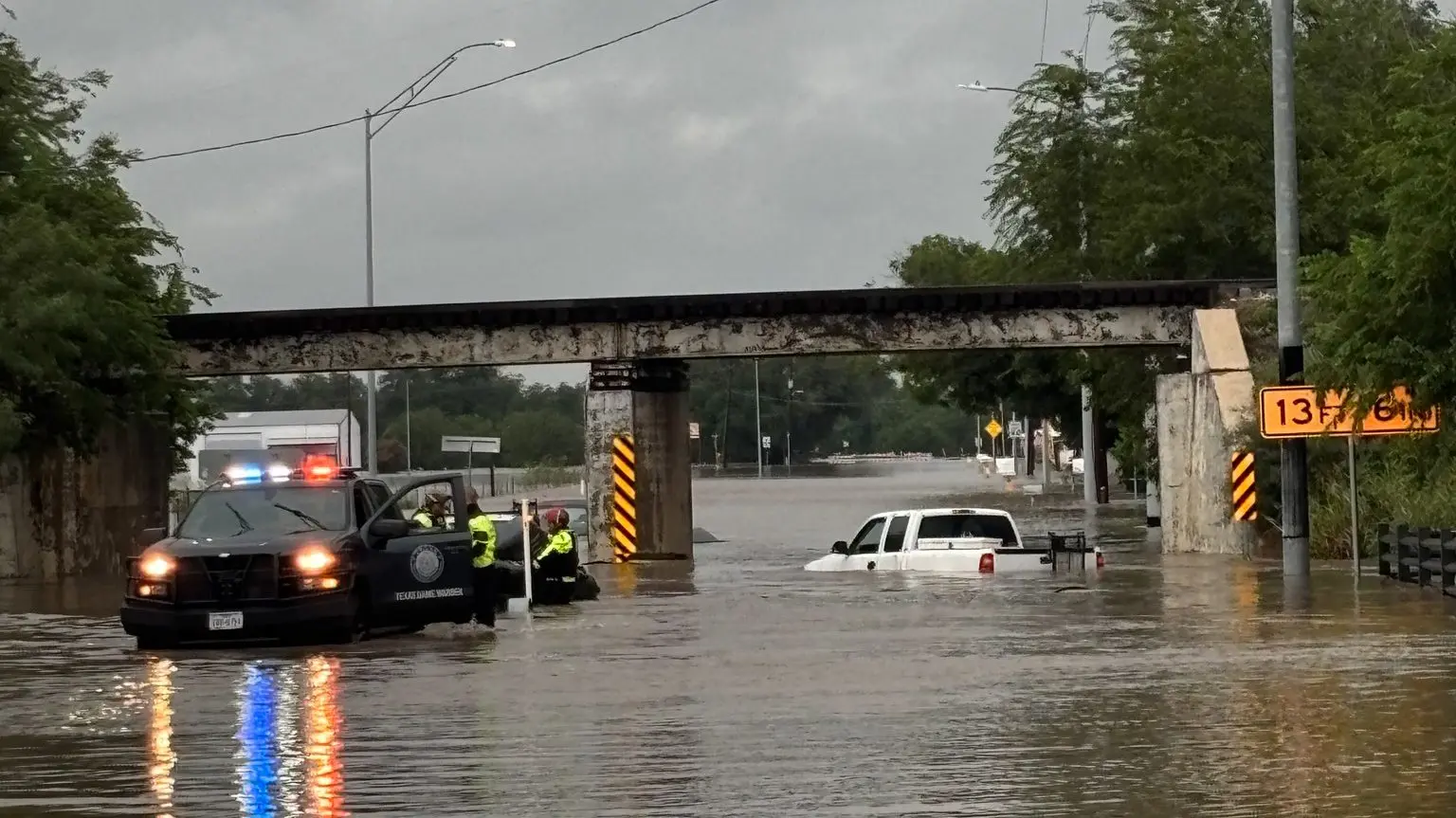
The San Saba County Sheriff’s Office shared the following information on social media Thursday:
San Saba County endured back-to-back historic flooding events over the past two weekends, as torrential rains swelled rivers, washed out roads, and inundated neighborhoods. Despite the unprecedented challenges, a unified emergency response and remarkable community support helped minimize loss of life and set the stage for long-term recovery.
“Back-to-back historic floods have tested our county like never before,” said County Judge Jody Fauley. “But what we saw was neighbors taking care of neighbors, families opening their doors to help others evacuate, and agencies working side-by-side to keep our community safe.”
Following the flooding, Judge Fauley issued a local disaster declaration to help San Saba County qualify for state and federal disaster assistance.
“Working closely with our local Texas Division of Emergency Management County Liaison Officer, Wyatt Deans, has allowed quicker and more effective assistance from the state,” Judge Fauley said. “This enhanced coordination between state and local agencies has been crucial.”
Judge Fauley also highlighted infrastructure concerns that predate the flood but are now urgent priorities.
“We’re looking at washed-out roads, potential bridge repairs, and chronic issues like Cherokee Creek in Bend that we’ve been monitoring for years. Working with Texas Dept of Transportation on a bridge at Rainey’s Crossing, for example, has been in progress for two years and remains a high priority.”
Despite the damage, Judge Fauley praised the strong community spirit: “It’s been incredible to see neighbors and families stepping in to help during evacuations. It’s that kind of unity that will carry us through recovery.”
Emergency Response and Rescues
Emergency response operations were activated through the County’s Emergency Operations Center (EOC), which opened at 9:00 a.m. on both July 4th and July 13th as rain events escalated. Emergency Management Coordinator Marsha Hardy coordinated multi-agency efforts, using social media, phone alerts, and in-person evacuations to reach residents.
“During both flooding events, we issued targeted evacuation notices. The first time, these were strongly recommended. By the second time, areas previously impacted received mandatory evacuation orders, and surrounding areas were given recommendations,” Hardy explained.
Evacuated areas included:
• Cabo RV Park
• City Golf Course RV Park
• CR 100
• CR 110
• Sulphur Springs
• Colorado Bend State Park
• Barefoot RV Park
• Hill Country Inn
• FM 501 and Sioux & Shawnee Streets in Cherokee
Over 42 evacuations were conducted by law enforcement and emergency services.
The San Saba County Sheriff’s Office responded to 20 rescue-related calls during the July 4th flooding, assisting over 30 individuals. During the July 13th event, 4 rescue-related calls resulted in 4 additional people rescued.
One notable rescue occurred when Deputies Austin Quarles and Dustin Morgan saved an individual with limited mobility who became trapped by rising floodwaters. Their swift actions helped prevent what could have been a tragic outcome.
The use of Texas Parks and Wildlife’s drone, operated by Game Warden Murr, also played a critical role in several rescue efforts. By providing aerial visibility in hard-to-reach or inaccessible areas, the drone allowed teams to locate stranded individuals more quickly and plan safer, more efficient response routes. This technology greatly enhanced the speed and precision of rescue operations during both flooding events. Their swift actions helped prevent what could have been a tragic outcome.
“Deputies faced flooded roads, rising water, and real-time danger. The efforts of Deputies Quarles and Morgan exemplify our department’s commitment to protecting life,” said Sheriff David Jenkins.
However, safety challenges were also met with avoidable risks.
“We issued numerous citations for people removing or disregarding barricades. These are in place for public safety and to protect our first responders. Moving a barricade is a Class B misdemeanor—it’s an arrestable offense,” Sheriff Jenkins stressed.
Deputies had to repeatedly man barricades to prevent unauthorized crossings, stretching limited resources.
“Every minute spent guarding a barricade is a minute not spent helping someone in need,” Chief Deputy Reid Daly added.
Support came from across the region as a magnitude of State and Local agencies assisted us with the necessary resources and manpower needed.
“We couldn’t have done this alone. Every department, volunteer, and agency that stepped up helped us get through this,” said Daly.
Damage and Recovery Efforts
Damage reporting through the state’s iSTAT system has been robust. As of July 15, a total of 182 homes have been reported:
• 31 homes affected
• 30 homes with minor damage
• 100 homes with major damage
• 21 homes destroyed
TDEM field teams are conducting additional surveys in the Bend and Cherokee areas. Residents are strongly encouraged to continue reporting damages at damage.tdem.texas.gov.
Hardy emphasized the importance of documentation: “Take photos of all damage, keep before-and-after pictures, save GPS location tags when possible, and document estimates or insurance paperwork. It all helps when requesting assistance.”
A FEMA Disaster Recovery Center (DRC) is expected to be deployed to San Saba County, where caseworkers will help residents navigate available programs. In the meantime, those in need of support are encouraged to contact Hill Country Community Action Association (HCCAA) at 325-372-5167 ext. 3595 or visit hccaa.com.
Shelters were established during both flooding events, first by the City and then supported by the American Red Cross. The shelters served evacuees from July 4th through July 6th, and again from July 13th through Monday, July 14th.
Looking Ahead
Though there were no fatalities and only two minor injuries reported, the impacts of these floods will be long-lasting. Infrastructure repair and flood mitigation will remain top priorities moving forward.
“These storms highlighted long-standing vulnerabilities. Our goal now is to rebuild stronger and be better prepared for future events,” said Judge Fauley.
Officials continue to urge residents to:
• Never drive through flooded roads
• Obey posted barricades
• Stay informed through official channels
• Document and report flood damage
“Turn around, don’t drown. And never move a barricade—it’s there to save your life,” Sheriff Jenkins reminded.
Despite the destruction, San Saba County stands united in recovery.
“As always, our community responds to its neighbors’ needs and has done a wonderful job throughout both of these floods,” said Judge Fauley. “Our first responders, San Saba County Sheriff’s Office, San Saba Police, Volunteer Fire Departments, County and City officials have been in force non-stop to protect our community. Marsha Hardy, our County Emergency Management Coordinator, and Wyatt Deans, our TDEM County Liaison Officer, have done an amazing job. We’ve experienced phenomenal support from agencies all over Texas, and our state and federal elected officials—as well as neighboring counties’ officials—have remained in open communication and support. We are blessed.”
Judge Fauley added, “We are San Saba County. We are a farm and ranch community. That means we acknowledge our dependence on God for our lives and livelihood. We praise God for His goodness, we pray for our needs and, in times of adversity, we stand on His promises and strength. We do not cast blame, we do not complain—we stand together as a County in God’s strength, and we fight back as one against adversity. We are not just San Saba. We are not just Richland Springs. We are not just Cherokee. WE ARE SAN SABA COUNTY.”
Collaborative statement with the San Saba County Judge, San Saba County Emergency Coordinator, and San Saba County Sheriff.